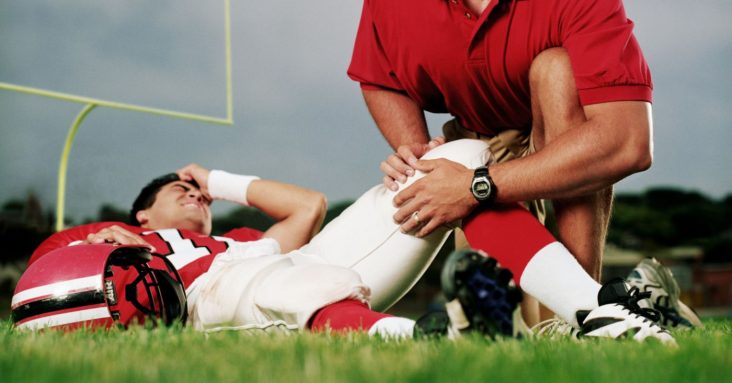
When an athlete goes down during a game or training session, one of the first questions people ask is: How serious is the injury?
Sometimes an athlete can walk away from a collision and return to play within minutes. In other situations, an apparently simple injury can turn out to involve a torn ligament, broken bone, severe muscle damage, or another condition that requires months of recovery.
So, what might confirm the worst for an athlete’s injury?
The answer usually comes from a combination of symptoms, physical examination, the mechanism of injury, and medical imaging. A player’s reaction immediately after an injury can provide clues, but it cannot reliably determine the extent of the damage.
This article explains the warning signs that may suggest a serious sports injury, how doctors determine the severity, and what typically happens after a major injury.
What Does a Serious Athlete Injury Look Like?
A serious injury can take many forms.
Depending on the sport and body part involved, it could be:
- A broken bone
- Torn ligament
- Torn muscle or tendon
- Joint dislocation
- Cartilage damage
- Severe concussion or brain injury
- Spinal injury
- Significant nerve damage
Some serious injuries are obvious immediately. Others may initially look less dramatic.
For example, an athlete may be able to walk despite having a significant ligament injury. Conversely, severe pain does not always mean that permanent or extensive damage has occurred.
That is why professional athletes are evaluated by medical professionals rather than relying solely on what the injury looks like from the sidelines.
Signs That May Suggest a Serious Injury
Certain symptoms deserve particular attention after an injury.
1. The Athlete Cannot Put Weight on the Limb
If an athlete cannot stand, walk, or put weight on an injured leg, the injury may be significant.
This can occur with fractures, severe ligament injuries, dislocations, and other serious conditions.
However, inability to bear weight alone cannot tell you exactly what has been damaged.
2. Severe or Increasing Pain
Severe pain immediately after an injury can be a warning sign.
Pain that continues to increase rather than gradually improving should also be taken seriously.
That said, pain intensity alone cannot determine whether an injury is severe.
3. Major Swelling
Rapid swelling around a joint can indicate significant internal injury.
For example, a knee that becomes dramatically swollen shortly after an injury may have bleeding or fluid accumulating inside the joint.
Rapid swelling can occur with several injuries, including ligament damage.
4. Obvious Deformity
A visibly abnormal position of a limb or joint is one of the clearest reasons to suspect a major injury.
Deformity can occur with:
- Fractures
- Dislocations
- Severe joint injuries
An athlete should not attempt to force a deformed joint back into position.
5. A Loud Pop or Snap
Some athletes report hearing or feeling a pop when an injury occurs.
This can happen with certain ligament or tendon injuries.
For example, an athlete may describe a popping sensation during an ACL injury.
However, hearing a pop does not automatically mean a specific ligament has been torn. Medical assessment is needed to determine the actual injury.
6. The Joint Feels Unstable
An athlete may describe a knee, ankle, shoulder, or other joint as feeling like it is “giving way.”
This can be associated with ligament or other structural injuries.
If an athlete cannot trust the injured joint to support them, continuing to play can potentially make the injury worse.
7. The Athlete Cannot Move the Body Part Normally
A significant reduction in movement can be another warning sign.
For example, an athlete may be unable to:
- Bend the knee
- Straighten the elbow
- Raise the shoulder
- Move the ankle
- Rotate a joint normally
The reason can range from pain and swelling to structural damage.
8. Numbness or Tingling
Numbness, tingling, or unusual sensations after an injury can indicate nerve involvement or impaired circulation.
These symptoms should not be ignored, particularly when accompanied by weakness, severe swelling, or changes in skin color.
9. Loss of Strength
An athlete who suddenly cannot use a limb normally or loses significant strength may have suffered a serious injury.
For example, a tendon injury can sometimes make it difficult or impossible to perform a movement that was previously easy.
What Actually Confirms a Serious Athlete Injury?
The symptoms above can raise suspicion, but they don’t confirm the diagnosis.
Confirmation usually requires an assessment by an appropriate healthcare professional.
The process may include several stages.
Physical Examination
A doctor, physiotherapist, athletic trainer, or other qualified professional may examine the injured area.
They may assess:
- Pain
- Swelling
- Range of motion
- Strength
- Joint stability
- Sensation
- Circulation
Specific physical tests can sometimes help identify particular injuries.
X-Ray
An X-ray is commonly used when a fracture is suspected.
It can show many types of broken bones but does not provide the same information about soft tissues such as ligaments and muscles.
MRI Scan
An MRI can provide detailed images of soft tissues.
It can help identify injuries involving structures such as:
- Ligaments
- Tendons
- Muscles
- Cartilage
- Certain types of bone injury
For athletes with suspected ligament or soft-tissue injuries, MRI may be particularly useful.
CT Scan
A CT scan can provide detailed images of bones and certain other structures.
It may be used when doctors need more detailed information than a standard X-ray can provide.
Why an MRI Doesn’t Always Mean the Worst
Hearing that an athlete is going for an MRI can cause fans to immediately assume the worst.
But an MRI does not automatically mean that a severe injury has occurred.
Doctors use MRI scans because they provide useful information about many types of injuries.
A player might undergo an MRI simply because medical staff need to determine the exact extent of an injury before deciding on treatment.
The scan provides evidence; it is not itself a diagnosis of a specific severe injury.
What Does a Torn ACL Mean for an Athlete?
An ACL tear is one of the most serious and well-known injuries in sports, particularly in football, basketball, and other sports involving sudden changes of direction.
The ACL helps stabilize the knee.
A complete tear can require a lengthy rehabilitation period and, in some cases, reconstructive surgery.
However, recovery varies significantly between athletes.
Factors include:
- Severity of the injury
- Whether other structures are damaged
- Treatment approach
- Surgery
- Rehabilitation
- Athlete’s overall health
- Sport-specific demands
A diagnosis of an ACL injury does not automatically mean an athlete’s career is over.
Many professional athletes have returned to high-level competition after ACL reconstruction and rehabilitation.
What Does a Torn Hamstring Mean?
Hamstring injuries are common in sports involving sprinting.
They can range from relatively minor muscle strains to significant tears.
A severe hamstring injury may involve:
- Sudden pain
- Difficulty walking
- Bruising
- Significant weakness
- Loss of sprinting ability
The severity is determined through clinical assessment and, when necessary, imaging.
What About a Broken Bone?
A fracture can range from a relatively simple break to a complicated injury requiring surgery.
Warning signs can include:
- Severe pain
- Swelling
- Bruising
- Difficulty using the limb
- Deformity
- Inability to bear weight
An X-ray is commonly used to confirm a suspected fracture.
Head Injuries Are Different
A head injury deserves particular caution.
An athlete does not need to lose consciousness to have a concussion or other brain injury.
Potential warning signs after a head impact include:
- Confusion
- Loss of balance
- Severe or worsening headache
- Vomiting
- Unusual behavior
- Memory problems
- Difficulty speaking
- Increasing drowsiness
- Seizure
- Loss of consciousness
Some symptoms can develop or worsen after the initial injury.
An athlete with a suspected concussion should be assessed by an appropriately trained healthcare professional and should not simply return to play because they appear fine.
When an Injury Might Be an Emergency
Some injuries require immediate emergency medical attention.
Seek urgent medical care when an injury involves signs such as:
- Severe bleeding
- Loss of consciousness
- Seizure
- Difficulty breathing
- Severe neck or back pain after trauma
- Paralysis or significant weakness
- Loss of sensation
- A severely deformed limb
- A limb that becomes cold, pale, or blue
- Rapidly worsening symptoms
These situations should not be managed by waiting to see whether the injury improves.
Why Athletes Sometimes Look Fine After Serious Injuries
One of the most confusing things about sports injuries is that appearance can be misleading.
An athlete may:
- Walk off the field
- Talk normally
- Have little visible swelling
- Continue moving the limb
and still have a significant injury.
Adrenaline and the excitement of competition can temporarily affect how an athlete perceives pain.
Some injuries also do not produce obvious external signs.
This is why professional sports teams rely on medical evaluations rather than simply watching an athlete walk off the field.
Can an Athlete Return to Play Immediately?
Whether an athlete can return to play depends on the injury and medical assessment.
For minor injuries, an athlete may sometimes return after evaluation.
For more serious injuries, continuing to play could increase damage or delay recovery.
Professional teams generally use medical staff to determine whether an athlete is fit to continue.
An athlete should not attempt to “play through” a potentially serious injury simply because they can tolerate the pain.
How Long Does a Serious Sports Injury Take to Heal?
There is no universal recovery time.
A minor muscle strain might improve within days or weeks, while a major ligament injury can require many months of rehabilitation.
Recovery depends on:
- Type of injury
- Severity
- Location
- Whether surgery is required
- Treatment
- Rehabilitation
- Athlete’s age and overall condition
- Sport and position
- Previous injuries
This is why statements such as “he’ll be out for six months” should generally be treated as estimates until the medical team provides a confirmed timeline.
What Does “Out Indefinitely” Mean?
Sports fans often see reports stating that an athlete is out indefinitely.
This does not necessarily mean that the injury is career-threatening.
It usually means that the team does not yet have a reliable return date.
The medical staff may need additional tests or time to determine how the athlete responds to treatment.
A more specific recovery timeline may become available after further evaluation.
Why Athletes Need Rehabilitation
Recovery doesn’t end when pain disappears.
Rehabilitation can help an athlete restore:
- Strength
- Flexibility
- Balance
- Coordination
- Joint stability
- Movement patterns
- Sport-specific skills
Returning too quickly can increase the risk of reinjury.
For professional athletes, the final stages of rehabilitation often involve gradually returning to training before competitive play.
Does a Serious Injury Mean the End of an Athlete’s Career?
Not necessarily.
Some injuries can be career-changing, but many athletes return successfully after major injuries.
Modern sports medicine, surgery, rehabilitation, nutrition, strength training, and injury-management techniques have improved the ability of athletes to recover.
A serious diagnosis may mean a long road back, but it does not automatically mean the end of a career.
Frequently Asked Questions
What might confirm the worst for an athlete’s injury?
Severe symptoms such as deformity, inability to use a limb, major swelling, instability, neurological symptoms, or loss of function can raise concern. However, imaging and professional medical assessment are generally needed to confirm the exact injury.
Does an athlete walking off the field mean the injury isn’t serious?
No. Some serious injuries allow an athlete to walk, particularly immediately after the incident.
Does hearing a pop mean an athlete tore a ligament?
Not necessarily. A pop can occur with several different injuries, and further examination is needed to determine the cause.
Does an MRI confirm a serious injury?
An MRI can identify many soft-tissue injuries, but the results need to be interpreted alongside the athlete’s symptoms and physical examination.
What is usually the worst sports injury?
There isn’t one injury that is universally “the worst.” Severity depends on the body part affected, extent of damage, complications, recovery prospects, and effect on the athlete’s ability to compete.
Can athletes recover from major injuries?
Yes. Many athletes return to professional competition after serious injuries, although recovery time and outcomes vary.
Final Thoughts
When an athlete suffers an injury, the most worrying signs are often loss of function, significant swelling, deformity, instability, severe pain, or neurological symptoms.
But even these signs cannot tell the complete story.
The only reliable way to determine what has actually happened is through appropriate medical assessment and, when necessary, diagnostic imaging such as an X-ray, MRI, or CT scan.
For fans watching from home, it is important to remember that an athlete’s reaction on the field is only part of the picture. The definitive diagnosis usually comes later, after medical professionals have examined the injury and completed the necessary tests.
A serious injury can mean a long recovery, but “serious” does not automatically mean “career-ending.” Many athletes have overcome major injuries and returned to compete at the highest level.