Athlete’s foot can be intensely itchy, irritating, and embarrassing, especially when the skin between your toes starts peeling, cracking, or becoming sore. This often leads people to search for one simple answer: what kills athlete’s foot instantly?
The honest answer is that there is no proven treatment that completely kills an athlete’s foot infection instantly. However, some antifungal treatments can start attacking the fungus quickly, while keeping the feet clean and dry can help stop the infection from thriving.
Athlete’s foot, medically known as tinea pedis, is a fungal infection of the skin. It is one form of ringworm and can affect anyone—not just athletes.
If you want the fastest practical approach, the goal is not simply to make the itching disappear. You need to treat the fungus and prevent it from coming back.
What Kills Athlete’s Foot the Fastest?
The fastest proven approach is generally an appropriate topical antifungal medication, such as terbinafine or clotrimazole, used according to the product directions.
These medications are designed to target the fungi responsible for athlete’s foot. Treatment duration depends on the medication and the type and location of the infection. For example, clinical guidance includes short courses of topical terbinafine for some forms of tinea pedis, while clotrimazole may require longer treatment.
However, “fastest” does not mean the infection will disappear after one application.
The itching and burning may improve before the fungus has been completely eliminated. Stopping treatment as soon as your foot looks better can allow the infection to return.
Can Athlete’s Foot Be Killed Instantly?
No, not reliably.
An antifungal may begin working quickly, but a fungal infection generally needs continued treatment to clear.
This distinction is important because several home remedies are promoted online as instant cures. Products or substances that cause intense burning or irritation may make the skin feel different, but that does not mean they have eliminated the fungus.
Trying harsh substances can also damage already-irritated skin.
The better strategy is to use a proven antifungal and create an environment where the fungus has difficulty surviving.
The Fastest Way to Treat Athlete’s Foot
If you suspect you have athlete’s foot, a practical treatment approach involves several steps.
1. Use an Antifungal Treatment
Look for an over-the-counter antifungal intended to treat athlete’s foot.
Common active ingredients include:
- Terbinafine
- Clotrimazole
- Other topical antifungal medications
Follow the instructions on the product label rather than applying more frequently in an attempt to make the infection disappear faster.
Terbinafine and clotrimazole are both used for tinea pedis, although their recommended treatment schedules can differ.
2. Keep Your Feet Completely Dry
This is one of the most important parts of treatment.
Fungi thrive in warm, moist environments. Sweaty shoes and damp skin between the toes can create conditions that allow athlete’s foot to persist.
After bathing:
- Wash your feet.
- Rinse away soap.
- Dry your feet carefully.
- Pay particular attention to the spaces between your toes.
- Put on clean, dry socks.
Don’t put socks on while your feet are still damp.
3. Change Your Socks Regularly
If your socks become sweaty or wet, change them.
The American Academy of Dermatology recommends wearing socks made from materials that wick moisture or dry quickly and changing socks daily, or more often when they become wet.
This simple habit can make a big difference because treating the skin while repeatedly putting it into a warm, damp environment works against you.
4. Let Your Shoes Dry
Your shoes can contribute to recurring athlete’s foot.
If possible, alternate your shoes so that each pair has time to dry completely before you wear them again. The AAD recommends allowing shoes to dry and choosing breathable footwear when possible.
If you wear the same sweaty shoes every day, your feet may repeatedly be exposed to the warm, moist environment that fungi prefer.
5. Don’t Scratch the Infection
Athlete’s foot can be extremely itchy, but scratching can damage the skin.
Broken skin can become painful and may increase the opportunity for other infections.
It is also possible to spread fungal infection from your feet to other parts of your body by touching or scratching the affected area and then touching another area.
What About Bleach for Athlete’s Foot?
Do not put household bleach directly on your skin to try to kill athlete’s foot.
Bleach is not a safe substitute for an antifungal medication. Athlete’s foot affects living skin, and applying harsh chemicals can cause irritation or chemical burns.
The goal should be to kill the fungus without damaging the skin around it.
Does Vinegar Kill Athlete’s Foot Instantly?
There is no reliable evidence that vinegar instantly eliminates athlete’s foot.
Although vinegar is frequently suggested as a home remedy, relying on it instead of an established antifungal treatment can delay effective treatment.
If you want the quickest reliable approach, use a product specifically intended to treat fungal skin infections and follow its directions.
Does Rubbing Alcohol Kill Athlete’s Foot?
Rubbing alcohol may kill some microorganisms on surfaces, but that does not make it an appropriate treatment for athlete’s foot.
Applying alcohol repeatedly to irritated or cracked skin can cause additional dryness and irritation.
Athlete’s foot requires treatment directed at the fungus causing the infection rather than simply trying to disinfect the surface of your skin.
Does Hydrogen Peroxide Kill Athlete’s Foot?
Hydrogen peroxide is another popular home remedy, but it should not be considered an instant cure for athlete’s foot.
Repeatedly applying irritating substances to infected or cracked skin can make the skin barrier worse.
A proven topical antifungal is a more appropriate option when athlete’s foot is the likely cause of the rash.
Can Hot Water Kill Athlete’s Foot?
Hot water is not an instant cure for athlete’s foot.
You should wash your feet regularly, but extremely hot water can irritate or burn your skin.
The important part is to wash the feet and then dry them thoroughly, especially between the toes.
What Makes Athlete’s Foot Keep Coming Back?
Sometimes the problem isn’t that the antifungal treatment failed. The fungus may be repeatedly reintroduced through moisture, footwear, towels, or contact with infected surfaces.
Common factors include:
- Wearing sweaty socks for long periods
- Wearing damp shoes
- Not drying between the toes
- Sharing towels or footwear
- Walking barefoot in communal showers or locker rooms
- Stopping treatment too early
- Continuing to wear footwear that remains contaminated or damp
Athlete’s foot can spread through contact with infected people and contaminated objects, while warm and humid conditions encourage fungal growth.
How to Stop Athlete’s Foot From Coming Back
Getting rid of the current infection is only part of the solution.
You also need to reduce the conditions that allow it to return.
Keep Your Feet Dry
Dry your feet thoroughly after bathing and change sweaty socks promptly.
Wear Breathable Shoes
Choose footwear that allows airflow when practical. Avoid keeping your feet enclosed in damp shoes for extended periods.
Don’t Share Towels
Don’t share towels, socks, shoes, or other personal items with someone who has athlete’s foot.
Wear Shower Shoes in Public Areas
Swimming pools, locker rooms, gyms, shared showers, and similar environments can expose bare feet to fungi.
Wearing flip-flops or shower sandals can reduce exposure.
Wash and Dry Your Feet Every Day
Good foot hygiene is particularly important if your feet sweat heavily.
How Long Does Athlete’s Foot Take to Go Away?
The answer varies depending on the severity of the infection, the treatment being used, and whether the diagnosis is correct.
Some topical antifungal treatments use relatively short courses, while others require several weeks. For example, CDC-linked clinical guidance lists terbinafine treatment schedules ranging from about one to two weeks for different forms of tinea pedis, while clotrimazole may be used for four weeks.
This is why you should follow the directions for the specific antifungal you are using rather than assuming that one application is enough.
What If the Itching Stops but the Skin Still Looks Abnormal?
Don’t automatically assume that the fungus is gone simply because the itching has improved.
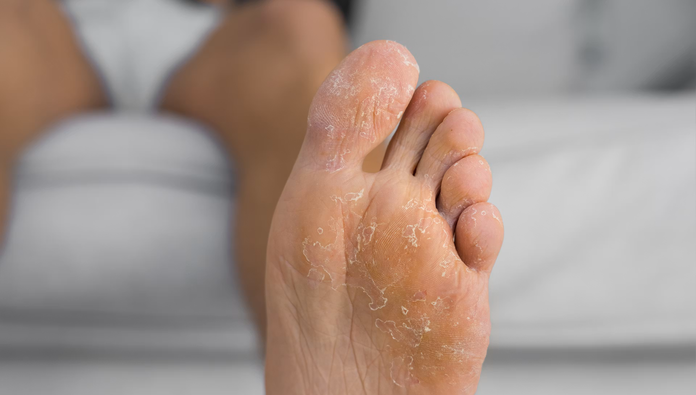
Athlete’s foot can cause peeling, scaling, cracking, and changes in the appearance of the skin.
Continue treatment according to the product instructions.
If the condition is not improving, is getting worse, or keeps returning, it is worth getting the diagnosis checked. Other skin conditions can resemble athlete’s foot.
When Should You See a Doctor?
Consider seeing a healthcare professional if:
- The rash is getting worse despite treatment.
- It repeatedly comes back.
- The skin is severely cracked or painful.
- There is significant swelling.
- You notice pus or other signs of infection.
- The infection is spreading.
- Your toenails are becoming thick, discolored, or brittle.
- You are unsure whether the rash is actually athlete’s foot.
The American Academy of Dermatology recommends seeing a dermatologist when athlete’s foot does not improve or becomes worse.
This is particularly important because not every itchy or peeling foot rash is caused by fungus.
Can Athlete’s Foot Spread to the Toenails?
Yes.
Fungal infections affecting the feet can also involve the toenails. The AAD recommends treating athlete’s foot promptly because the fungus can spread to the toenails and cause a nail infection.
Nail fungus can be much harder to treat than athlete’s foot, so dealing with a foot infection early is worthwhile.
The Bottom Line: What Kills Athlete’s Foot Instantly?
There is no safe, proven way to completely kill athlete’s foot instantly.
The fastest reliable approach is to use an appropriate antifungal treatment, follow the treatment instructions, and keep your feet dry. Terbinafine and clotrimazole are examples of topical antifungals used for athlete’s foot.
Avoid dangerous “instant cures” such as applying bleach or other harsh chemicals to your skin.
Think of treatment as a combination:
Antifungal treatment + dry feet + clean socks + dry footwear + good hygiene = a much better chance of clearing athlete’s foot and keeping it away.
If symptoms do not improve or become worse, get the condition evaluated rather than repeatedly trying different home remedies.